Have you ever sat down and felt your toilet shift beneath you? That uncomfortable wobble is more than a minor annoyance. It can be a warning sign of loose bolts, an uneven floor, or a problem with the toilet flange.
If you’re wondering, why is my toilet loose from the floor? you’re not alone. It’s a common household problem, especially with older toilets or those that weren’t installed correctly.
A loose toilet can eventually damage the wax seal, cause unpleasant odors, or allow water to leak beneath the floor. The good news is that some causes are easy to fix without replacing the toilet.
Let’s look at what causes a toilet to wobble, how to identify the problem, and the safest way to fix it.
Why Is My Toilet Loose From the Floor?
A toilet normally stays secure because its base rests firmly on the floor and closet bolts hold it to the toilet flange.
If the bolts loosen, the flange breaks, or the floor becomes uneven, the toilet may start moving when someone sits on it.
The most common causes include:
- Loose or damaged closet bolts.
- A cracked or corroded toilet flange.
- Uneven flooring beneath the toilet.
- Water-damaged or weakened subflooring.
- Improper installation.
A damaged wax ring can also cause leaks, but the wax ring itself does not hold the toilet in place. Its job is to seal the connection between the toilet outlet and the drain.
Signs Your Toilet Is Loose From the Floor
Before you start repairing anything, check for these warning signs:
- Rocking or movement: The toilet shifts when you sit down.
- Water around the base: Moisture appears after flushing.
- Unpleasant odors: Sewer smells may indicate a failed drain seal.
- Visible gaps: The toilet doesn’t sit evenly against the floor.
- Clicking or creaking: Movement produces sounds near the base or flooring.
Not every loose toilet will leak immediately. However, repeated movement can damage the seal and increase the risk of water reaching the subfloor.
Overall Repair Details
| Repair difficulty | Easy to moderate, depending on the cause |
| Estimated time | 15–30 minutes for minor adjustments; 1–3 hours or more for removal and reinstallation |
| Repair type | DIY for minor problems; professional repair for damaged flooring or plumbing |
| Main tools | Adjustable wrench, screwdriver, utility knife |
| Possible materials | Plastic shims, closet bolts, wax ring or compatible gasket, bathroom caulk |
| Estimated material cost | Approximately $10–$50 for many basic repairs, depending on the parts required |
These estimates don’t include professional labor or major flange and subfloor repairs.
Common Reasons Your Toilet Is Loose From the Floor
Several problems can make a toilet unstable. Finding the actual cause before removing the toilet can save time and unnecessary work.
1. Loose Toilet Bolts
Most floor-mounted toilets are secured using two closet bolts attached to the flange beneath the toilet.
Over time, the nuts may loosen, especially if the toilet was not properly supported during installation.
When the bolts no longer hold the base securely, the toilet may rock from side to side.
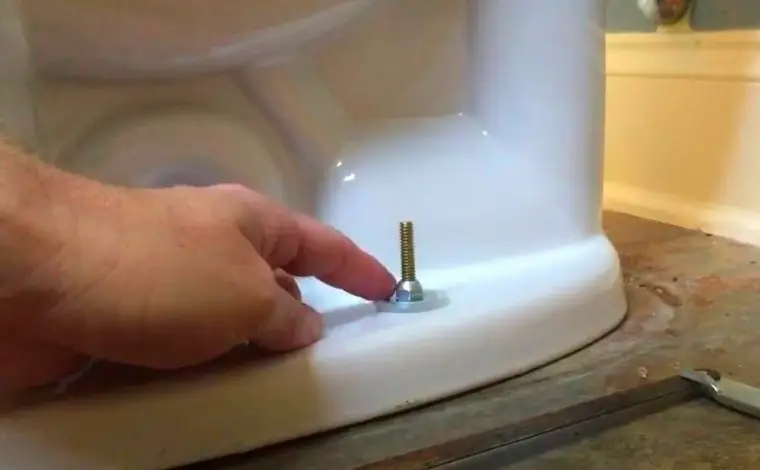
Solution: Remove the plastic bolt caps and check the nuts. If the toilet is otherwise stable and the flange is sound, tighten the nuts gently, alternating between both sides.
Stop when the toilet is secure. Overtightening can crack the porcelain.
If a bolt spins without tightening, the flange or bolt connection may be damaged.
2. Damaged Wax Ring
The wax ring creates a seal between the toilet outlet and the drain flange.
It does not provide structural support, but a loose toilet can shift enough to damage or compromise that seal.
When the seal fails, wastewater may leak around the base during flushing. Sewer odors can also develop.
If you’re unfamiliar with this component, our guide on how a toilet wax ring works explains its purpose and replacement considerations.
Solution: If you suspect a failed seal, remove the toilet and inspect the flange before installing a new wax ring or compatible rubber gasket.
Do not rely on tightening the bolts to repair a leaking wax ring.
3. Damaged or Broken Toilet Flange
The toilet flange connects the fixture to the drain and provides the attachment points for the closet bolts.
If the flange is cracked, corroded, or poorly secured, the bolts may no longer hold the toilet firmly.
A flange installed at the wrong height can also cause sealing or installation problems.
For example, a toilet flange that’s too low may prevent the seal from compressing properly. A flange that sits too high can keep the toilet base from resting evenly on the floor.
Solution: Inspect the flange after removing the toilet. Minor damage may be repairable with an appropriate flange repair ring or kit.
Severe damage may require flange replacement. The correct repair depends on the flange material, its connection to the drain, and the condition of the floor.
4. Uneven or Damaged Flooring
Sometimes, the toilet itself is perfectly fine. The problem is the floor underneath.
Uneven tile, missing support, or small gaps under the toilet base can cause rocking.
Water damage is more serious. If the subfloor becomes soft or begins to rot, it may no longer provide enough support.
Solution: Small gaps beneath an otherwise solid toilet can often be corrected using plastic toilet shims.
However, if the floor feels soft, spongy, or unstable, the damaged area needs to be repaired. Shims and caulk will not fix structural deterioration.
5. Improper Toilet Installation
A toilet that starts rocking shortly after installation may not have been positioned or secured correctly.
Common installation mistakes include:
- Leaving the toilet unsupported on an uneven floor.
- Using damaged or poorly fitted closet bolts.
- Installing the flange incorrectly.
- Failing to secure the flange to a sound floor.
- Improperly positioning the toilet during installation.
Solution: Check the installation and correct the underlying problem rather than repeatedly tightening the bolts.
If the flange is unusually high, our guide on fixing a cast iron toilet flange that’s too high explains the issue and possible corrections for that type of installation.
How to Fix a Toilet That’s Loose From the Floor
Now that you know why your toilet is loose from the floor, it’s time to fix it.
Start with a simple inspection. You may not need to remove the entire toilet if the problem is only a slightly loose bolt or a small gap beneath the base.
Tools and Materials You’ll Need
- Adjustable wrench.
- Plastic toilet shims.
- Utility knife.
- Rubber gloves.
- New wax ring or compatible rubber seal, if needed.
- Closet bolts and washers, if needed.
- Toilet flange repair kit, if required.
- Bathroom-grade silicone caulk.
- Sponge, towels, and bucket.
- Putty knife.
- Screwdriver.
Step 1: Check the Toilet Bolts First
Before disconnecting anything, remove the bolt caps at the toilet base.
- Inspect both bolts and nuts for damage or corrosion.
- Check whether the toilet moves because the nuts are loose.
- Gently tighten the nuts in alternating turns.
- Test whether the toilet still rocks.
If the base is now stable and there are no signs of leakage or floor damage, further disassembly may not be necessary.
However, if the toilet remains loose, don’t keep tightening the nuts. You could crack the porcelain or damage the flange.
Step 2: Turn Off the Water and Empty the Toilet
If the toilet needs to be removed, shut off the water supply first.
- Turn the shutoff valve clockwise.
- Flush the toilet to empty most of the tank water.
- Use a sponge to remove the remaining water from the tank and bowl.
- Disconnect the water supply line.
Tip: Keep a bucket and towels nearby to catch leftover water.
Step 3: Remove the Toilet
- Remove the closet bolt nuts and washers.
- Cut through any old caulk around the base.
- Carefully lift the toilet straight up to separate it from the old seal.
- Place the toilet on a protective towel or sheet.
One-piece toilets can be heavy. Get help lifting the toilet if necessary.
If you’re removing a toilet for the first time, follow the removal section in our toilet replacement guide for additional instructions.
Temporarily cover the open drain to reduce sewer odors, but remember to remove the cover before reinstalling the toilet.
Step 4: Inspect the Flange and Replace the Seal
Remove the old wax using a putty knife. Inspect the flange and surrounding floor.
Look for cracks, corrosion, loose fasteners, or soft flooring.
If the flange is secure and the floor is sound, install a new wax ring or compatible gasket according to its manufacturer’s instructions.
Never reuse an old compressed wax ring after removing the toilet.
If the flange is broken or improperly positioned, repair that problem before reinstalling the toilet.
Step 5: Reinstall the Toilet
- Position the new closet bolts correctly.
- Align the toilet outlet and mounting holes with the flange.
- Lower the toilet carefully onto the new seal.
- Press straight down to seat a wax ring without sliding the toilet around.
- Install the washers and nuts.
- Tighten both sides gradually without excessive force.
Once a wax ring has been compressed, avoid lifting or repositioning the toilet. If the seal is disturbed, install a new ring.
For a more detailed walkthrough of bowl positioning and mounting, see our two-piece toilet installation guide.
Step 6: Add Plastic Shims if Needed
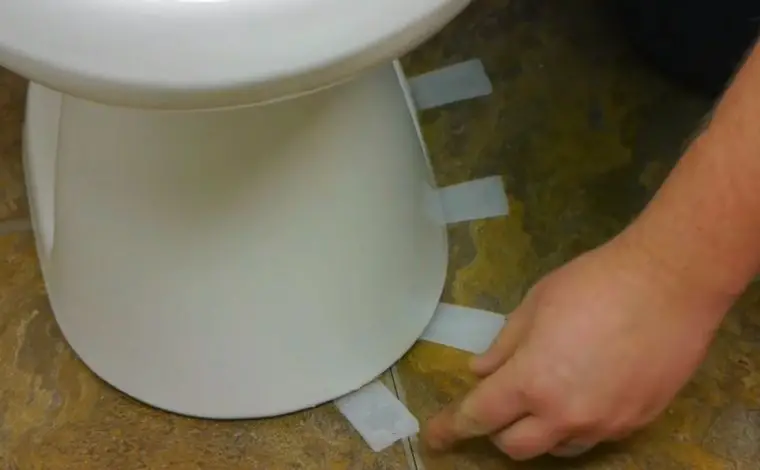
Check whether the toilet rocks after positioning it.
If the flange and floor are sound but small gaps remain beneath the base, carefully insert plastic toilet shims.
Adjust them until the toilet sits firmly without movement. Then tighten the closet bolts gently and trim the exposed shim ends.
Shims should support the toilet. They should not be used to hide a broken flange or damaged subfloor.
Step 7: Reconnect the Water and Test for Leaks
- Reconnect the water supply line.
- Open the shutoff valve.
- Allow the tank to fill.
- Check the supply connection for leaks.
- Flush several times and inspect the toilet base.
Use dry paper towels to check for moisture around the connection points and base.
If water appears beneath the toilet, stop using it and investigate the problem before finishing the repair.
Water around the base isn’t always caused by the wax ring. Our article on why a toilet leaks from the bottom explains other possible causes.
Step 8: Apply Caulk Around the Toilet Base
Once the toilet is secure and leak-free, apply bathroom-grade caulk where the base meets the floor.
Caulk helps prevent cleaning water and dirt from collecting beneath the toilet. However, it should never be used as a substitute for proper mechanical support.
Some installation practices leave a small gap behind the toilet so future leaks may become visible. Others require sealing the entire joint.
Follow the toilet manufacturer’s instructions and applicable local plumbing codes.
Allow the caulk to cure for the period specified on its packaging. Don’t assume every product is ready after four to six hours.
When Should You Call a Plumber?
Not every loose toilet requires professional repair. However, certain problems are more serious than a loose bolt.
1. Cracked Toilet Base
If the porcelain base is cracked, stop using the toilet. Tightening the bolts or applying caulk will not make a damaged fixture safe.
A cracked toilet may need replacement.
2. Damaged Subfloor
A soft or spongy floor can indicate hidden water damage.
Repairing the toilet without correcting the floor may allow the same problem to return.
3. Broken or Corroded Flange
If the flange cannot hold the closet bolts securely, it must be repaired or replaced.
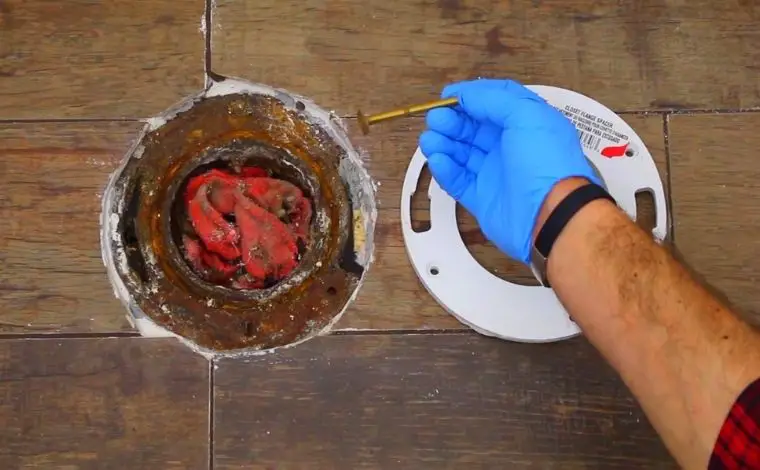
Some flange repairs are straightforward, but others involve drain connections or damaged flooring that require professional work.
4. Persistent Leaks or Sewer Odors
If water continues appearing around the base after the toilet has been reset, the seal or drain connection may still be faulty.
Persistent sewer odors also deserve inspection, especially when accompanied by visible movement or leakage.
How to Prevent Your Toilet From Becoming Loose Again
Once you’ve fixed the problem, a few simple habits can help keep the toilet stable.
- Check for movement: Notice any rocking when using or cleaning the toilet.
- Avoid overtightening: Excessive force can crack porcelain or damage mounting hardware.
- Use appropriate parts: Install compatible closet bolts, seals, and repair components.
- Watch for moisture: Investigate unexplained water around the toilet base.
- Maintain proper support: Correct uneven flooring rather than depending on caulk to hold the toilet.
A properly installed toilet should feel solid when you sit on it. If movement returns, check the flange and floor rather than simply tightening the bolts again.
Quick Troubleshooting Checklist
| Problem | Likely Cause | Recommended Fix |
|---|---|---|
| Toilet rocks slightly | Loose bolts or uneven flooring | Inspect bolts and add shims if appropriate |
| Water leaks around the base | Failed seal or drain connection | Inspect and replace the seal as needed |
| Toilet moves after installation | Improper mounting or support | Check flange, bolts, and floor |
| Bad odor near toilet | Possible drain seal problem | Inspect the seal and plumbing connection |
| Soft flooring around toilet | Possible water damage | Arrange floor and plumbing inspection |
Frequently Asked Questions
Why is my toilet loose from the floor even after tightening the bolts?
The flange may be damaged, the closet bolts may not be anchored properly, or the floor may be uneven. Tightening the bolts won’t solve these underlying problems.
Can a loose toilet cause water damage?
Yes. Repeated movement can compromise the drain seal and allow wastewater to leak beneath the toilet. Over time, this may damage the subfloor and surrounding materials.
How long does it take to fix a loose toilet?
Minor bolt adjustments or shimming may take 15–30 minutes. Removing and reinstalling the toilet usually takes longer, especially if the flange or flooring needs repair.
Is it safe to use a wobbly toilet temporarily?
It’s best to avoid using it until the cause is identified. Continued movement can damage the seal, worsen an existing leak, or crack the porcelain.
Can I use a rubber seal instead of a wax ring?
Yes. Some wax-free toilet seals use rubber or foam materials. However, you must choose a product compatible with your toilet, flange height, and installation conditions.
Can I fix a loose toilet without removing it?
Sometimes. If the only problem is loose mounting hardware or a small gap beneath an otherwise sound toilet, tightening the bolts or adding shims may be enough.
But if the flange is damaged, the seal is leaking, or the floor is deteriorating, the toilet may need to be removed.
Will caulking stop a toilet from rocking?
No. Caulk is not a structural repair. The toilet must be properly secured and supported before caulk is applied around its base.
Final Words: Don’t Ignore a Loose Toilet
Understanding why your toilet is loose from the floor is the first step toward preventing leaks and unnecessary repairs.
Sometimes, the fix is as simple as tightening a loose bolt or adding a few plastic shims. Other times, the problem involves a damaged flange, failed seal, or weakened subfloor.
The important thing is to identify the actual cause before making repairs.
If your toilet rocks every time you sit down, don’t ignore it. A small repair today may prevent a much more expensive plumbing problem later.

We are really lucky to have a hard-working, multi-skilled plumber on our team. Collin D. Gallegos, a professional plumber who has worked with us since 2012, is an expert in vent, septic, and drainage systems. He is a Certified Master Plumber and has worked on various commercial plumbing projects. He usually helps our readers resolve plumbing and pipe-related issues with a proper DIY troubleshooting and repair guide.