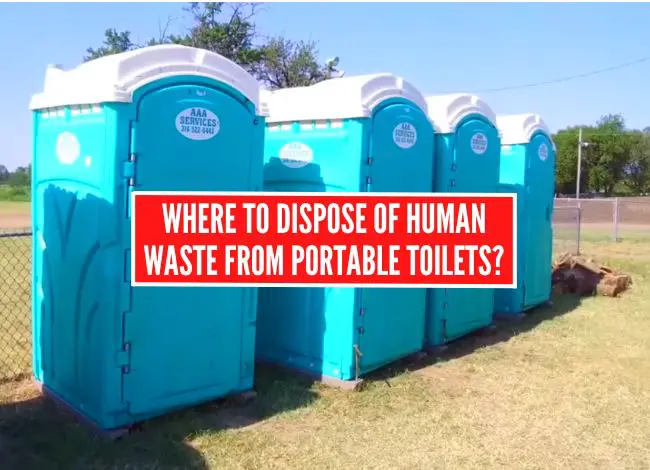
Portable toilets are convenient for camping trips, outdoor events, construction sites, and places without regular bathroom plumbing. However, once the waste tank fills up, you need to empty it safely. Improper disposal can create unpleasant odors, spread harmful germs, and contaminate nearby water sources.
So, where to dispose of human waste from portable toilets? The safest option is usually an approved RV dump station, an authorized sewage disposal facility, or a licensed portable toilet sanitation service. The right choice depends on the type of toilet you’re using and local disposal regulations.
In this article, we’ll discuss the different disposal methods, how to empty a portable toilet safely, and what you should never do with collected human waste.
Where to Dispose of Human Waste From Portable Toilets?
Most portable toilet holding tanks should be emptied at facilities specifically approved to receive wastewater or sewage.
Here are the common options:
| Disposal Location | Suitable For |
|---|---|
| RV dump station | RV blackwater tanks and compatible portable cassette toilets |
| Authorized sewage facility | Accepted portable toilet wastewater and holding tank contents |
| Licensed sanitation service | Event toilets, construction toilets, and large holding tanks |
| Approved campsite disposal point | Camping toilets and compatible removable tanks |
| Designated waste receptacle | Approved, properly sealed human waste disposal bags |
Important: Not every facility accepts every type of waste. Portable toilet chemicals, tank capacity, and local wastewater rules may determine whether a particular dump station can accept your waste.
Types of Portable Toilet Waste Disposal Systems
Portable toilets don’t all work the same way. Some collect liquid waste in sealed tanks, while others use composting chambers or specially designed disposable bags.
Understanding your toilet type makes disposal much easier.
1. Outdoor Portable Toilets
Outdoor portable toilets are commonly used at festivals, construction sites, sporting events, and temporary outdoor facilities.
Most have large holding tanks that collect waste until a sanitation service empties them.
Common disposal arrangements include:
- Professional waste collection: A licensed sanitation company removes waste using specialized pumping equipment.
- Approved sewage treatment facilities: Collected waste is transported to a facility authorized to receive and treat it.
- Designated campground dump stations: Smaller compatible portable toilet tanks may be emptied at approved camping facilities.
Large outdoor portable toilets should generally be serviced by professionals rather than manually emptied by event organizers or visitors.
2. Indoor and Mobile Portable Toilets
Portable toilets are also used in RVs, camper vans, boats, tiny houses, and temporary indoor spaces.
These systems often use removable waste containers or tanks that can be transported to a disposal point.
Common types include:
- Cassette toilets: Feature removable holding tanks that can be emptied at compatible disposal stations.
- Chemical toilets: Use approved additives to manage odors and support waste handling. Their contents must go to a facility that accepts them.
- Composting toilets: Collect and process waste differently, with disposal requirements depending on the system and local rules.
- Bag-based portable toilets: Use purpose-designed waste containment bags that may be accepted at designated disposal locations.
For smaller homes and mobile living, our guide on composting toilets in tiny houses explains how these systems differ from traditional flushing toilets.
1. Use an Approved RV Dump Station
An RV dump station is one of the most practical places to dispose of wastewater from compatible portable toilets.
These stations are commonly found at RV parks, some campgrounds, and other facilities serving recreational vehicles.
They typically have a designated sewage connection where wastewater can be emptied into an approved collection system.
Before using one, confirm that the facility accepts your particular type of portable toilet waste.
Some stations accept cassette toilet contents, while others may have restrictions on certain chemical additives or commercial waste.
Never empty a portable toilet into a storm drain, roadside ditch, or ordinary outdoor drainage opening. These are not substitutes for approved wastewater disposal facilities.
2. Contact a Licensed Portable Toilet Waste Service
If you’re managing portable toilets at an event, construction site, or large outdoor gathering, hiring a sanitation company is usually the best solution.
Professional services use vacuum trucks and specialized equipment to remove waste directly from holding tanks.
They then transport the collected material to authorized treatment facilities.
This method offers several advantages:
- Reduces direct contact with untreated sewage.
- Handles large quantities of waste.
- Helps prevent accidental spills and leaks.
- Provides scheduled cleaning and tank emptying.
- Supports compliance with applicable sanitation regulations.
If you’ve rented a portable toilet, ask the rental company whether regular pumping and waste disposal are included in the agreement.
3. Use an Authorized Sewage Disposal Facility
Some municipalities and wastewater treatment operators accept portable toilet waste through approved receiving facilities.
However, this doesn’t mean you can pour waste into any public sewer opening.
Wastewater facilities may require prior approval, specific discharge procedures, or a licensed waste hauler.
Contact your local wastewater authority before transporting or attempting to discharge portable toilet waste.
The U.S. Environmental Protection Agency’s wastewater disposal guidance provides additional information for RV owners, mobile home operators, and related facilities.
4. Can You Dispose of Portable Toilet Waste in a Landfill?
Untreated liquid waste from a portable toilet holding tank should not be dumped into a regular landfill.
Landfills generally aren’t designed to receive liquid sewage directly from portable toilet tanks.
However, certain specially manufactured human waste disposal bags, often called WAG bags, may be accepted at designated receptacles or approved waste facilities.
These products are designed to contain waste securely, and some include materials that gel liquids.
Whether they can be placed in ordinary trash depends on the product instructions and local waste regulations.
Don’t assume that a biodegradable bag or a regular plastic bag is automatically approved for human waste disposal.
5. Can You Bury Portable Toilet Waste Outdoors?
Emptying a portable toilet tank into a hole in the ground is generally not an acceptable disposal method.
Holding tanks may contain large quantities of waste, toilet chemicals, and wastewater that can contaminate soil or groundwater.
There is an important difference between dumping a portable toilet tank and using a backcountry cathole.
In certain wilderness areas, authorities permit individuals to bury small amounts of freshly deposited human waste in a properly located cathole.
Where this practice is allowed, the National Park Service commonly recommends a hole approximately 6–8 inches deep and at least 200 feet from water sources, campsites, and trails.
However, some parks prohibit catholes entirely and require visitors to carry out all human waste.
These backcountry rules do not authorize emptying a portable toilet holding tank into the ground.
Always follow the regulations for the specific campsite, park, or outdoor location.
How to Dispose of Human Waste From Portable Toilets Safely
If you have a small portable camping toilet with a removable holding tank, the emptying process is usually straightforward.
However, it’s important to follow the manufacturer’s instructions and use an approved disposal facility.
Step 1: Secure the Waste Tank
Before moving the toilet, make sure the waste holding tank is properly closed and sealed.
Check the cap, valve, and surrounding fittings for visible damage or leaks.
A leaking tank can contaminate your vehicle, storage area, or campsite.
Step 2: Wear Protective Equipment
Wear waterproof disposable gloves when handling the waste tank.
Keep your face away from the discharge opening, avoid splashing, and wash your hands thoroughly with soap and water afterward.
If splashing is possible, eye protection is also a sensible precaution.
Step 3: Find an Authorized Disposal Point
Locate an RV dump station, campground sanitation point, or another facility that accepts your waste.
Some camping areas provide dedicated cassette toilet disposal points separate from ordinary restrooms.
Never assume that a standard public toilet, septic system, or household drain can accept portable toilet contents, especially if chemical additives are present.
Step 4: Empty the Waste Tank Carefully
Follow the instructions for your portable toilet model.
For a typical removable cassette tank:
- Carry the sealed tank to the approved disposal point.
- Position the discharge outlet over the designated opening.
- Open the cap and operate the vent or pressure-release mechanism as instructed by the manufacturer.
- Empty the tank slowly to minimize splashing.
- Rinse the tank only where the facility permits rinsing and wastewater disposal.
Some facilities provide a dedicated rinse hose. Avoid using potable water hoses or drinking-water taps for waste-tank cleaning.
Step 5: Clean and Reassemble the Toilet
After emptying the tank, clean it using products recommended by the toilet manufacturer.
Check the seals and fittings before reinstalling the tank.
If the model uses waste treatment additives, refill them according to the manufacturer’s directions.
Never mix different toilet chemicals or cleaning products unless the manufacturer specifically permits it.
How Do You Dispose of Composting Toilet Waste?
Composting toilets require a different disposal approach because they don’t necessarily collect wastewater in the same way as chemical or cassette toilets.
Some composting toilets separate urine and solid waste, while others process waste in a single chamber.
The collected material may still contain harmful pathogens, even if it looks dry or resembles finished compost.
For this reason, don’t assume it is automatically safe to spread around your garden.
Disposal depends on the system’s design, the level of treatment, and local regulations.
Some areas permit specific composting or waste-management arrangements, while others require collected material to be handled through an approved disposal service.
If you own this type of toilet, our guide on when and how to empty a composting toilet covers maintenance and emptying considerations.
Why Is Proper Human Waste Disposal Important?
Human waste can contain bacteria, viruses, and parasites capable of causing illness.
When untreated waste enters drinking-water sources or comes into contact with people, it creates unnecessary health risks.
Proper disposal helps protect:
- Public health: Reduces exposure to disease-causing microorganisms.
- Water quality: Helps prevent contamination of rivers, lakes, and groundwater.
- Local wildlife: Reduces pollution in natural habitats.
- Campsite hygiene: Prevents unpleasant odors and unsanitary conditions.
- Wastewater infrastructure: Directs waste to facilities designed to handle and treat it.
Improper waste disposal may also lead to penalties or cleanup costs, depending on local regulations.
Common Portable Toilet Waste Disposal Mistakes
Many disposal problems happen because people assume portable toilet waste can be handled like ordinary household trash.
Here are some mistakes to avoid:
- Dumping untreated waste onto the ground or into a hole.
- Emptying holding tanks into storm drains or waterways.
- Using regular garbage bags for liquid sewage.
- Putting untreated portable toilet contents into a landfill.
- Using a sewage disposal station without checking its restrictions.
- Mixing different chemical treatments without checking compatibility.
- Failing to clean and inspect the waste tank after emptying.
For composting models, regular maintenance also helps prevent odors and handling problems. You can learn more in our guide on cleaning a composting toilet.
Frequently Asked Questions
1. Where can I empty a portable toilet waste tank?
You can usually empty a compatible portable toilet tank at an approved RV dump station, a designated campsite sanitation point, or an authorized sewage disposal facility. Check the facility’s rules before use.
2. Can I empty a portable toilet into my home toilet?
Don’t assume it’s allowed or safe. Some small cassette toilet products may permit disposal into a suitable sanitary toilet, but chemical additives, septic systems, local regulations, and the manufacturer’s instructions must be considered first.
3. Can portable toilet waste go into a septic tank?
Only if the receiving septic system is suitable and the owner or operator permits it. Portable toilet additives and concentrated waste may create problems for some septic systems.
4. Can I throw portable toilet waste into regular trash?
Untreated liquid sewage should not go into ordinary trash. Certain approved, sealed human waste disposal bag systems may be accepted in designated receptacles or regular trash where local rules permit.
5. How often should a portable toilet be emptied?
Emptying frequency depends on tank capacity, the number of users, and the toilet design. Follow the manufacturer’s fill-level recommendations and don’t allow the tank to overflow.
6. Where do portable toilet rental companies take the waste?
Sanitation companies generally transport collected waste to authorized receiving facilities or wastewater treatment systems that accept portable toilet waste. Requirements vary by location.
Final Thoughts
Knowing where to dispose of human waste from portable toilets is essential whether you’re camping, traveling in an RV, or managing a large outdoor event.
For small camping and cassette toilets, an approved RV dump station or designated campsite disposal point is often the most practical solution. For large event toilets, hiring a licensed sanitation service is usually the safest choice.
Never empty a holding tank into a storm drain, river, roadside ditch, or unauthorized hole in the ground.
The best approach is simple: keep the waste securely contained, use a facility approved for your toilet type, and follow the manufacturer’s instructions and local regulations.
Proper waste disposal protects your health, keeps outdoor areas clean, and helps prevent unnecessary environmental pollution.

We are really lucky to have a hard-working, multi-skilled plumber on our team. Collin D. Gallegos, a professional plumber who has worked with us since 2012, is an expert in vent, septic, and drainage systems. He is a Certified Master Plumber and has worked on various commercial plumbing projects. He usually helps our readers resolve plumbing and pipe-related issues with a proper DIY troubleshooting and repair guide.