However, knowing how to clean a toilet seat properly is important. Some cleaning products can damage plastic, discolor wooden seats, or corrode metal hinges.
Toilet seats also collect moisture, skin oils, urine splashes, and other residue. Regular cleaning helps remove this contamination and reduces unpleasant odors.
In this guide, I’ll explain different cleaning methods, how to remove yellow stains, and the safest way to maintain plastic, wooden, and specialty toilet seats in 2026.
Why Cleaning the Toilet Seat Matters
Keeping your toilet seat clean is important for hygiene, comfort, and long-term maintenance.
Although the toilet bowl usually gets the most attention, the seat, lid, hinges, and mounting areas can collect residue over time.
Regular cleaning helps to:
- Remove visible dirt, urine residue, and everyday stains.
- Reduce germs left on frequently touched surfaces.
- Prevent unpleasant odors around the seat and hinges.
- Protect the seat’s finish when suitable products are used.
- Keep the bathroom looking clean and comfortable.
Cleaning and disinfecting are not exactly the same thing.
Cleaning removes dirt and many germs using soap, water, and gentle wiping. Disinfecting uses an appropriate product to kill certain remaining germs.
For most homes, regular cleaning with a mild detergent is sufficient for routine maintenance. Additional disinfection may be useful when someone in the household is sick or when a surface has been contaminated.
Always select a product that’s compatible with your toilet seat material.
Different Methods to Clean a Toilet Seat
There are several ways to clean a toilet seat, but not every method is suitable for every material.
Before trying a household cleaner, check whether your seat is plastic, painted or molded wood, vinyl-covered, or part of an electronic bidet system.
For most conventional toilet seats, mild soap and water are the safest starting point.
1. Cleaning with Bleach
Bleach is a well-known household disinfectant, but it should not be the default cleaner for every toilet seat.
Some manufacturers warn against chlorine bleach because it can damage protective coatings, discolor plastic, or corrode metal hinge components.
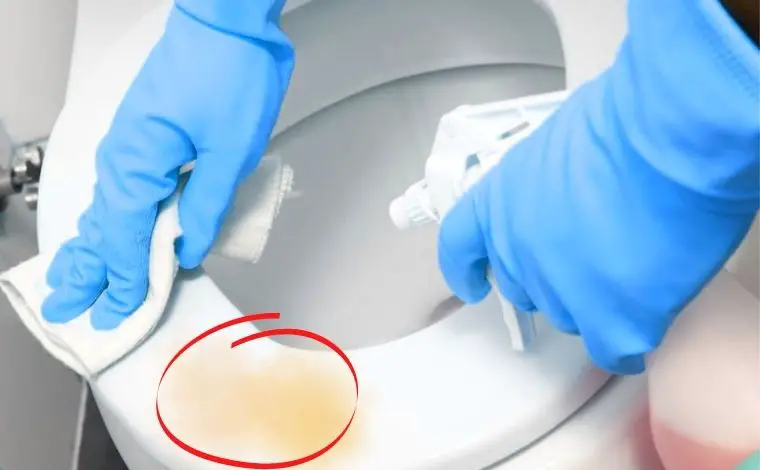
When can you use bleach?
Only use a bleach-based product when both the toilet seat manufacturer and the cleaning product label permit it.
If bleach is approved:
- Wear suitable gloves and ventilate the bathroom.
- Clean visible dirt with a compatible mild detergent first.
- Prepare or apply the bleach product exactly as directed on its label.
- Keep the surface wet for the specified contact time.
- Rinse the surface if instructed by the product or seat manufacturer.
- Dry the seat before using it again.
Do not spray concentrated bleach directly onto hinges or electronic components. Never mix bleach with vinegar, ammonia, or other cleaners.
2. Cleaning with Vinegar
White vinegar is sometimes used for removing mineral residue and mild surface stains.
However, vinegar is acidic, so it is not suitable for every toilet seat finish. Some painted wood, coated metal, soft-close mechanisms, and specialty plastic surfaces can be damaged by repeated exposure.
How to use vinegar safely:
- Check the manufacturer’s care instructions first.
- If permitted, apply a small amount of diluted white vinegar to a soft cloth.
- Test a hidden area for discoloration or finish damage.
- Gently wipe the affected spot without soaking the hinges.
- Remove residue with a damp cloth and dry the surface.
Do not leave vinegar-soaked towels on the seat for long periods unless the manufacturer specifically allows it.
Vinegar may help remove some deposits, but it should not replace a registered disinfectant when proper disinfection is required.
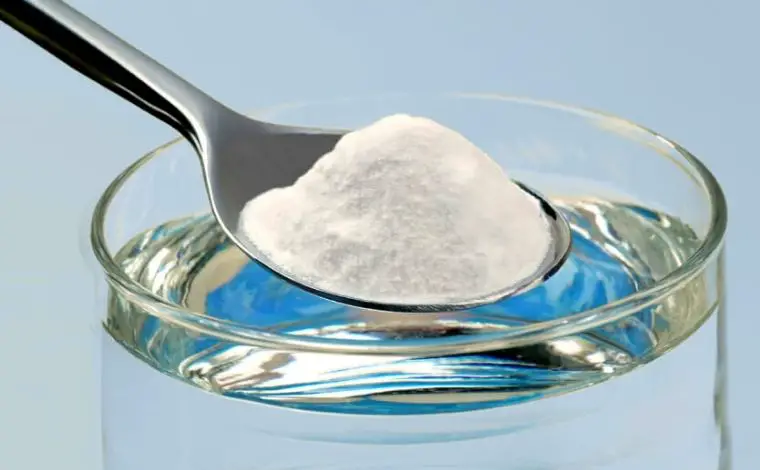
3. Cleaning with Baking Soda
Baking soda is another popular household cleaning ingredient. It can help loosen certain stains and reduce mild odors.
However, because baking soda has a slightly abrasive texture, aggressive scrubbing may dull or scratch some glossy plastic and painted surfaces.
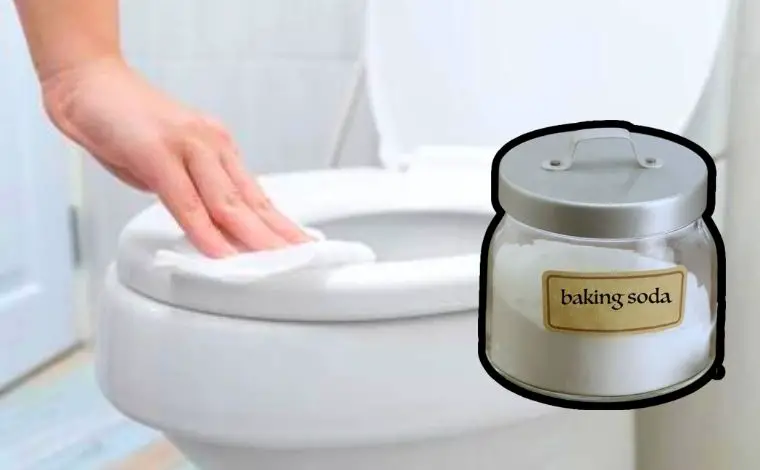
How to clean with baking soda:
- Mix a small amount of baking soda with water to make a soft paste.
- Test the paste on an inconspicuous area.
- If the surface tolerates it, gently apply the paste to the stain.
- Use a soft cloth rather than a stiff brush.
- Wipe away the paste completely with a damp cloth.
- Dry the surface with a clean microfiber towel.
Do not use this method on delicate coatings or specialty seats unless the manufacturer approves it.
Baking soda is not a reliable disinfectant, and adding vinegar afterward does not turn it into one.
4. Cleaning with Coca-Cola
You may have heard that Coca-Cola can remove stains because it contains acids. This household cleaning trick is sometimes mentioned for toilet bowls and other hard surfaces.
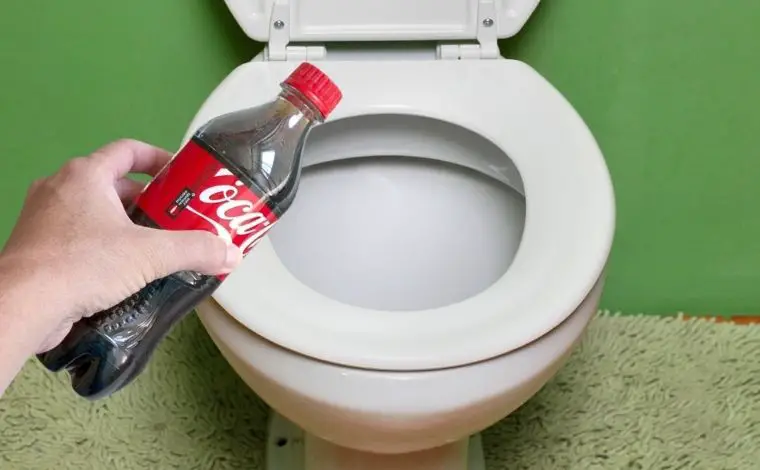
However, I don’t recommend using Coca-Cola to clean a toilet seat.
Regular cola contains sugar and other ingredients that can leave sticky residue behind. It is not an approved disinfectant and offers no clear advantage over a suitable bathroom cleaner.
For ordinary stains, mild dish soap and water are more practical choices.
If the seat has stubborn discoloration, use a manufacturer-approved stain remover or consider replacing the seat when the material itself has permanently changed color.
Which Cleaner Is Best for Your Toilet Seat?
The right cleaner depends on the material and finish.
| Seat Material | Preferred Cleaning Method | What to Avoid |
|---|---|---|
| Plastic | Mild detergent, water, soft cloth | Abrasives and incompatible bleach cleaners |
| Molded Wood | Lightly damp cloth with mild soap | Soaking, harsh chemicals, damaged paint |
| Vinyl-Covered | Gentle upholstery-compatible cleaner | Harsh scrubbing and excessive moisture |
| Bidet Seat | Manufacturer-approved cleaner applied to a cloth | Direct sprays on controls and electrical openings |
| Metal Hinges | Damp cloth followed by thorough drying | Acids, chlorine products, and standing water |
If your toilet seat has a specialized coating or electronic features, its instruction manual should take priority over general cleaning advice.
How to Clean a Toilet Seat Step by Step
If you want a simple method that works for most conventional toilet seats, follow these steps.
Step 1: Gather Your Cleaning Supplies
You’ll need a pair of cleaning gloves, mild dish soap or another compatible detergent, a soft sponge, two microfiber cloths, and clean water.
Keep a separate cloth for the toilet seat rather than using the same cloth on kitchen or other household surfaces.
Step 2: Prepare the Surface
Raise the lid and seat so you can reach both sides. Remove loose dust and debris with a damp cloth.
Prepare a small amount of mild soapy water. There’s usually no need to use harsh chemicals for regular cleaning.
Step 3: Wipe the Seat and Lid
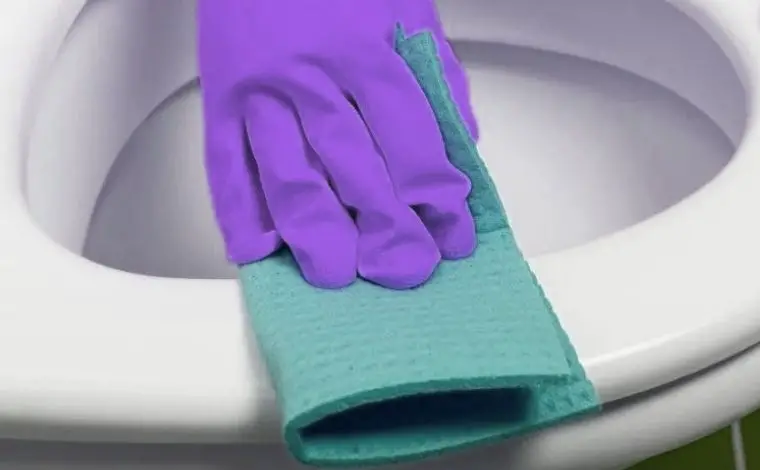
Use a soft cloth dampened with the cleaning solution to wipe the top and underside of the toilet seat.
Clean the lid, edges, and areas near the mounting hardware.
Avoid allowing water to run into soft-close hinges or electrical components.
Step 4: Clean Around the Hinges
Dirt and urine residue often collect near the toilet seat hinges.
If your seat has a quick-release mechanism, follow the manufacturer’s directions to remove it safely.
For fixed seats, use a small soft brush or cloth to reach narrow areas without damaging the fittings.
Our guide to cleaning toilet seat hinges explains this process in more detail.
Step 5: Remove Cleaning Residue
Wipe the surface again using a clean, lightly dampened cloth.
This helps remove soap, loosened dirt, and remaining residue.
Step 6: Disinfect if Needed and Dry
If someone in the household has been sick, or the seat requires disinfection after contamination, choose a suitable disinfectant approved for that surface.
Follow the product’s instructions, including the required wet contact time and any rinsing directions.
Finally, dry the seat and hinges with a clean microfiber cloth.
You’re done. The seat should now be clean and ready for use.
How to Remove Yellow Stains from a Toilet Seat
Yellow stains are a common problem, especially on white plastic toilet seats.
These marks may result from urine residue, cleaning chemicals, surface aging, sunlight exposure, or changes in the plastic itself.
Before trying to remove the stains, determine whether the discoloration is sitting on the surface or has become part of the material.
Step 1: Start with Mild Soap
Wash the affected area using a soft cloth and mild detergent.
Many recent stains improve after removing surface residue.
Step 2: Try an Approved Stain Cleaner
If the stain remains, consult the seat manufacturer’s recommendations.
For certain surfaces, a gentle cleaner or suitable stain-removal product may help.
A baking soda paste can be tested on compatible finishes, but avoid aggressive scrubbing.
Step 3: Check for Permanent Discoloration
If the plastic itself has yellowed due to aging or chemical exposure, ordinary cleaning may not restore its original color.
In that case, replacing the seat may be more effective than repeatedly applying stronger chemicals.
For vinyl seats, see our vinyl toilet seat stain-removal tips.
How to Keep Your Toilet Seat Clean for Longer
Maintaining a clean toilet seat becomes easier when cleaning is part of your normal bathroom routine.
- Clean regularly: Wipe the seat at least weekly, or more often when visibly dirty or heavily used.
- Remove splashes promptly: Urine and cleaning-product residue become harder to remove when left on the surface.
- Use mild products: Routine cleaning rarely requires strong chemicals.
- Dry the hinges: Avoid leaving standing water around metal or soft-close components.
- Check mounting areas: Look for hidden residue around bolts and hinge covers.
- Avoid abrasive tools: Metal pads and stiff brushes can scratch the finish.
- Choose compatible disinfectants: Use them when needed, following the product label.
- Replace damaged seats: Deep cracks, peeling coatings, and heavily damaged surfaces may become difficult to clean properly.
It’s also helpful to clean the rest of the bathroom regularly. Our toilet seat size calculator can help if you eventually need to buy a correctly fitting replacement.
Common Mistakes to Avoid While Cleaning a Toilet Seat
One of the most common mistakes is assuming that a product safe for a ceramic toilet bowl is also safe for the toilet seat.
Most seats are made from different materials and may have finishes that react poorly to strong chemicals.
Other mistakes include:
- Mixing bleach with vinegar or other household cleaners.
- Using undiluted chemicals without checking compatibility.
- Scrubbing glossy plastic with abrasive pads.
- Leaving cleaning products on the surface longer than directed.
- Spraying water directly into electric bidet controls.
- Failing to clean the underside of the seat and hinges.
- Using a disinfectant without observing its required contact time.
- Assuming vinegar or baking soda provides reliable disinfection.
Remember that cleaning and disinfecting serve different purposes. A mild soap solution is usually appropriate for everyday dirt, while a registered disinfectant is used when the situation calls for additional germ control.
When Should You Replace Your Toilet Seat?
Sometimes cleaning is no longer enough.
If your toilet seat has deep cracks, peeling paint, damaged hinge attachments, or permanent discoloration, replacing it may be the better option.
Before buying a replacement, measure the bowl shape and mounting-hole spacing.
Round, elongated, and compact elongated seats are not always interchangeable.
Electronic bidet seats may also need additional clearance behind the bowl.
Conclusion: How to Clean a Toilet Seat Safely
Learning how to clean a toilet seat doesn’t require expensive products or complicated techniques.
For most households, mild soap, water, and a soft cloth are enough for routine cleaning.
Pay special attention to the underside of the seat, mounting areas, and hinges, where dirt and residue can collect unnoticed.
If you need to disinfect the surface, use a compatible product and follow its label instead of experimenting with household chemical mixtures.
With regular care and suitable products, you can keep your toilet seat clean, comfortable, and in good condition for years.
Frequently Asked Questions About Cleaning Toilet Seats
1. What is the best cleaner for a toilet seat?
For routine cleaning, mild soap and water are suitable for many conventional plastic seats. Always check the manufacturer’s recommendations, especially for wooden, coated, and electronic seats.
2. Can yellow stains be removed from a toilet seat?
Surface stains can sometimes be removed with gentle cleaning. However, yellowing caused by material aging or chemical damage may be permanent. In those cases, replacement is usually the better solution.
3. How often should I clean my toilet seat?
Weekly cleaning is a reasonable starting point for many households. Clean more often when the seat is visibly dirty or receives frequent use.
4. Can I use dish soap to clean a toilet seat?
Yes. A small amount of mild dish soap diluted in water is suitable for many non-electronic seats. Use a soft cloth, remove residue, and dry the surface.
5. Is it safe to use bleach on a toilet seat?
Not always. Bleach may damage certain plastics, coatings, wooden seats, and metal components. Only use it if the seat manufacturer and disinfectant label specifically permit it.
6. Can I clean an electronic bidet toilet seat the same way?
No. Electronic bidet seats have controls, electrical connections, and specialized surfaces. Follow the exact manufacturer’s cleaning instructions and avoid spraying liquids into electrical openings.

Hi, this is Robert Crossan, the owner of this website, has 17 years of experience in the installation, maintenance, and repair of toilets and plumbing systems. After completing the Level 2 Basic Plumbing course in 2005, I started working in both domestic and commercial buildings as a professional plumber. So I can figure out the core difference between different toilet models and brands. It also helped me monitor their work performance and setbacks.