The bathroom is one of the most important spaces in any home, and keeping it clean makes a big difference to your family’s comfort.
You might clean the toilet every day, scrub the bowl regularly, and mop the bathroom floor. But what happens when an unpleasant urine smell keeps coming back?
You may find yourself wondering, “Why does my toilet smell like urine even after cleaning?”
The problem isn’t always inside the toilet bowl. Urine can collect around the seat hinges, underneath the toilet, or in the grout between floor tiles. Sometimes, a damaged toilet seal allows sewer odors to escape, making the bathroom smell unpleasant even when everything looks clean.
The good news is that many of these problems are easy to identify once you know where to look.
Let’s go through the most common causes and find out how to get rid of that stubborn bathroom smell.
Why Does My Toilet Smell Like Urine?
If your toilet smells like urine after cleaning, the first step is to find out exactly where the odor is coming from.
Sometimes, the source is dried urine around the toilet base. Other times, it’s trapped beneath the toilet seat or absorbed into nearby flooring.
There is also an important difference between a urine smell and a sewer smell.
Urine odor usually comes from residue left on bathroom surfaces. Sewer odor may indicate a problem with the toilet’s drain seal, standing water, or plumbing system.
Identifying the difference can save you from unnecessary cleaning or replacing parts that are still working properly.
Common Reasons Your Toilet Smells Like Urine
1. Damaged Wax Ring or Toilet Seal
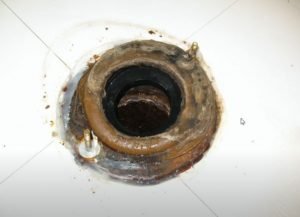
The wax ring sits beneath the toilet and creates a seal between the toilet outlet and the drain flange.
Its job is to keep wastewater inside the drain and prevent sewer gases from escaping into the bathroom.
If the toilet shifts or the seal is installed incorrectly, that connection may become compromised.
Signs to look for:
- A strong odor near the toilet base.
- Water appearing around the toilet after flushing.
- A toilet that rocks or moves when you sit on it.
- Discoloration or dampness around the floor.
How to Fix It: Check for movement and visible moisture around the toilet base.
If you notice water appearing after flushing, our guide on why a toilet leaks from the bottom explains how to narrow down the source before removing the fixture.
If you suspect the wax ring has failed, the toilet may need to be removed and reseated with a new seal.
Don’t assume every urine smell means the wax ring is damaged. If the floor is dry and the toilet is stable, check for urine residue before starting a plumbing repair.
2. Urine Splashes Around the Toilet Base
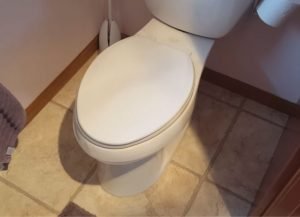
Sometimes, the answer is much simpler than a plumbing problem.
Small urine splashes can land on the outside of the bowl, around the base, or on the floor without anyone noticing.
This can happen in any household, particularly when people use the toilet while standing.
Over time, dried urine residue may produce an unpleasant odor, especially in warm or humid bathrooms.
How to Fix It:
- Clean the outside of the toilet bowl.
- Wipe around the toilet base and mounting bolt covers.
- Clean the floor immediately surrounding the toilet.
- Pay attention to corners and areas behind the toilet.
- Encourage household members to avoid splashing and clean up accidents promptly.
A cloth or small soft brush can help you reach narrow spaces that a regular mop misses.
3. Dirty Toilet Seat Hinges
It’s easy to clean the toilet seat without noticing what has collected around its hinges.
Urine droplets can enter small gaps between the seat, hinge covers, and porcelain.
Because these spaces are difficult to reach, the residue may remain even after a thorough bathroom cleaning.
How to Fix It: Lift the seat and inspect both hinges.
Some toilet seats have quick-release mechanisms that allow you to remove the seat for cleaning.
If your seat has this feature, follow the manufacturer’s instructions and clean underneath it. Our guide on how to remove a toilet seat covers the process for different mounting designs.
A cracked or damaged seat may need replacing if urine has entered areas that cannot be cleaned properly. If replacement is necessary, follow our instructions on how to replace an old toilet seat.
4. Urine Absorbed Into Grout or Caulk
If your bathroom has tiled flooring, the grout lines around the toilet deserve attention.
Grout can absorb moisture when it isn’t properly sealed or has become damaged.
Urine may also collect around deteriorated caulk or the edges of the flooring.
This explains why some bathrooms smell clean immediately after mopping but develop the same odor again later.
How to Fix It:
- Inspect grout lines around the toilet.
- Clean affected areas using a product suitable for the surface.
- Consider an enzyme-based urine odor remover approved for the flooring material.
- Replace damaged caulk if necessary, after correcting any underlying leak.
- Allow the area to dry completely.
Test cleaning products in an inconspicuous area first. Some chemicals may damage natural stone, grout sealers, or other bathroom finishes.
5. Poor Bathroom Ventilation
Another reason your toilet may smell like urine is poor ventilation.
When air doesn’t circulate properly, odors remain in the bathroom longer.
High humidity can also make lingering odors more noticeable.
This is especially common in bathrooms without windows or with broken exhaust fans.
How to Fix It:
- Use the bathroom exhaust fan during and after showers.
- Open a window when practical.
- Clean dust from accessible exhaust fan covers.
- Repair a fan that no longer works properly.
- Keep bathroom floors and mats dry.
Ventilation helps remove odors, but it won’t eliminate urine residue or repair a leaking toilet seal. You still need to address the source.
6. Dirty Toilet Rim or Hidden Bowl Surfaces
Even a toilet bowl that looks clean may have residue beneath the rim.
Depending on the toilet design, mineral buildup and deposits can collect around water outlets and hard-to-reach porcelain surfaces.
These deposits may contribute to unpleasant odors.
How to Fix It: Clean beneath the rim with a suitable toilet brush and manufacturer-approved cleaner.
Pay attention to areas that don’t receive much water during flushing.
For rimless toilets, follow the cleaning instructions for that particular design.
7. Bathroom Mats and Nearby Fabrics
Sometimes, the smell isn’t coming from the toilet at all.
Bathroom mats, towels, cleaning cloths, and other nearby materials can absorb urine splashes or moisture.
If these items aren’t washed regularly, they may hold odors even after the floor has been cleaned.
How to Fix It: Wash or replace affected fabrics according to their care instructions.
Allow washable items to dry completely before returning them to the bathroom.
How to Get Rid of Urine Smell in the Bathroom
If you’re still wondering “Why does my toilet smell like urine?” after checking the usual places, it’s time for a more thorough cleaning.
The goal is to remove the source of the odor rather than cover it with an air freshener.
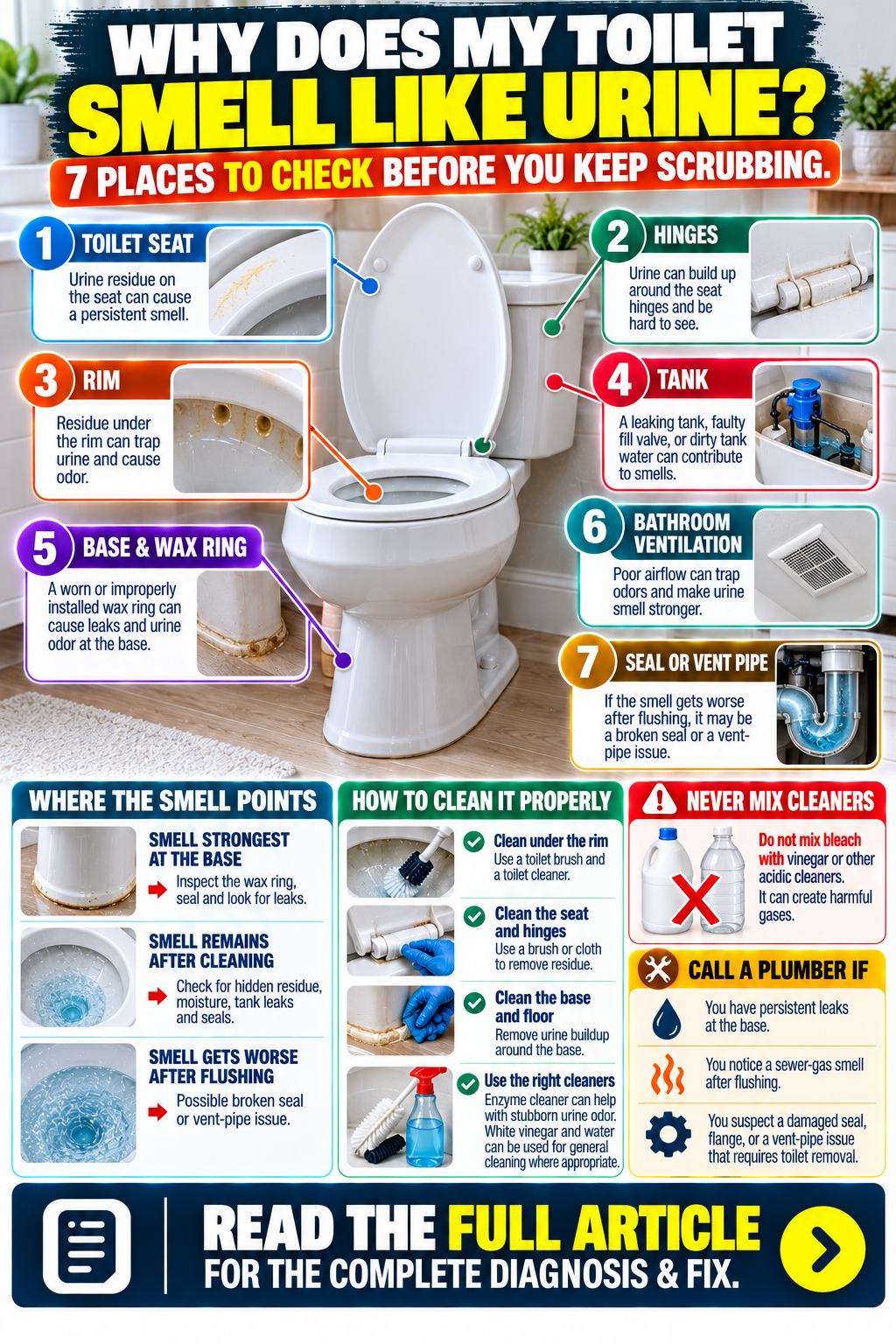
Step 1: Inspect the Area Around the Toilet
Start by looking around the toilet base, seat hinges, and surrounding floor.
Look for yellowish residue, dampness, stained grout, or areas that smell stronger than others.
If you notice moisture appearing after flushing, investigate a possible plumbing leak before cleaning again.
Step 2: Clean the Toilet Seat and Hinges
Wipe the seat, underside, hinge covers, and surrounding porcelain.
If the seat can be removed safely, clean beneath the mounting points and allow everything to dry before reinstalling it.
For additional cleaning methods, see our guide on how to clean a toilet seat properly, including the hinges and other commonly missed areas.
Step 3: Clean the Floor and Grout
Use a bathroom cleaner appropriate for your flooring.
For stubborn urine odor, an enzyme-based cleaner designed for urine residue may be helpful.
Follow the label instructions, including the recommended contact time and surface compatibility.
Don’t forget the floor behind the toilet and the narrow gap between the toilet and nearby walls.
Step 4: Wash Bathroom Mats and Fabrics
Remove bathroom mats, towels, and cleaning cloths that may have absorbed odors.
Wash them according to their care labels and dry them thoroughly.
Step 5: Improve Ventilation
Turn on the exhaust fan or open a window to help the bathroom dry.
If the odor returns quickly despite proper cleaning, look for a hidden leak or another source of moisture.
Cleaning Supplies You May Need
You don’t need a complicated collection of chemicals. A few appropriate cleaning supplies are usually enough.
- Rubber cleaning gloves.
- A soft bathroom brush or old toothbrush.
- Microfiber cloths or disposable cleaning towels.
- A bathroom cleaner suitable for your surfaces.
- An enzyme-based urine odor remover, if needed.
- A toilet brush for cleaning beneath the rim.
If you want a complete routine for the entire toilet, our guide on how to clean a toilet properly covers the bowl, exterior, seat, and other areas.
Important safety warning: Never mix bleach with vinegar, ammonia, or other cleaning products. Dangerous fumes can form. Do not apply bleach directly to urine residue; remove the residue first using an appropriate cleaner and follow all product safety instructions.
If you choose to disinfect a surface after cleaning, use a compatible product exactly as directed on its label.
How to Tell Urine Odor From Sewer Gas Smell
These two problems can smell unpleasant, but their causes are different.
| What You Notice | Possible Cause | What to Check |
|---|---|---|
| Strong urine smell near the floor | Dried urine splashes | Floor, grout, and toilet base |
| Smell strongest around the seat | Trapped urine residue | Seat hinges and mounting points |
| Sewer-like odor near toilet base | Possible failed wax ring | Toilet movement and leaks |
| Odor becomes worse in humidity | Residual contamination or damp materials | Grout, caulk, and bathroom mats |
| Sewer smell near an unused drain | Dry drain trap | Floor drain, shower, or sink |
| Persistent odor with slow drainage | Possible drain or vent problem | Plumbing inspection |
If the smell resembles sewage rather than urine, inspect nearby floor drains and other plumbing fixtures. An unused drain trap may dry out and allow sewer gas to enter the bathroom.
If you cannot identify the source, our guide on different types of toilet odors and their remedies explains how sewer, urine, and other smells can point to different problems.
How to Prevent Urine Smells From Coming Back
Once the odor is gone, a few simple habits can keep the bathroom smelling fresh.
- Clean regularly: Pay attention to the outside of the toilet, not just the bowl.
- Wipe up splashes quickly: Don’t allow urine to dry around the seat or floor.
- Clean seat hinges: Inspect hidden spaces occasionally.
- Keep the bathroom dry: Use ventilation and wash bathroom mats regularly.
- Check grout and caulk: Repair damaged areas when necessary.
- Address leaks promptly: Don’t ignore moisture around the toilet base.
There’s no need to replace your toilet just because the bathroom smells unpleasant. In many cases, a detailed cleaning of the right areas solves the problem.
When Should You Call a Plumber?
Most urine-related odors can be handled with cleaning and basic maintenance.
However, call a plumber if:
- The toilet rocks or moves when used.
- Water appears around the base after flushing.
- You notice a persistent sewer odor.
- The floor feels soft or shows water damage.
- Several drains produce unpleasant smells.
- The odor continues despite thorough cleaning and drying.
A plumber can inspect the wax ring, toilet flange, drain connections, and other possible sources of sewer gas.
Frequently Asked Questions
Why does my clean toilet still smell like urine?
Urine residue may be trapped around the seat hinges, under the toilet rim, in the grout, or around the toilet base. These areas can hold odors even when the visible porcelain looks clean.
How do I get rid of urine smell from my toilet?
Clean the toilet seat, hinges, outer bowl, and surrounding floor. For stubborn residue, use an appropriate enzyme-based cleaner. If the smell continues, inspect for hidden leaks or damaged seals.
Can a damaged wax ring cause a urine smell?
A damaged wax ring can allow sewer odors and sometimes wastewater to escape near the toilet base. The resulting smell may be mistaken for urine. Check for leaks, toilet movement, or odor concentrated near the floor.
Is it safe to use bleach to remove urine smell?
Bleach should not be mixed with urine, ammonia, vinegar, or other cleaning products. Remove urine residue using a suitable cleaner first. Follow the product label if disinfection is needed afterward.
Why does my toilet smell worse after flushing?
If a sewer-like odor becomes stronger after flushing, a damaged toilet seal or drainage problem may be responsible. If the odor smells specifically like urine, check whether contaminated surfaces are being splashed or disturbed.
Why does my bathroom smell like urine but the toilet is clean?
The smell may be coming from floor grout, caulk, bathroom mats, seat hinges, or another nearby surface. Cleaning only the toilet bowl won’t remove residue from those areas.
Will an air freshener remove urine odor permanently?
No. Air fresheners may temporarily cover unpleasant smells, but the odor will usually return if urine residue, moisture, or a plumbing leak remains.
Conclusion
So, why does my toilet smell like urine? The answer is often hidden in places you don’t normally clean, such as toilet seat hinges, floor grout, or the area around the toilet base.
Start with a thorough inspection and clean the areas where urine residue can collect. Make sure the bathroom has enough ventilation and keep nearby fabrics dry.
If the smell is more like sewage or you notice water around the toilet base, don’t assume cleaning will solve it. A damaged wax ring or another plumbing problem may need repair.
By identifying the actual source instead of simply covering the odor, you can keep your bathroom cleaner, fresher, and more comfortable for everyone.

Hi, this is Robert Crossan, the owner of this website, has 17 years of experience in the installation, maintenance, and repair of toilets and plumbing systems. After completing the Level 2 Basic Plumbing course in 2005, I started working in both domestic and commercial buildings as a professional plumber. So I can figure out the core difference between different toilet models and brands. It also helped me monitor their work performance and setbacks.