Have you ever finished using the bathroom, flushed the toilet, and watched a surprisingly large poop refuse to go down?
It’s frustrating, especially when it happens more than once. You might wonder, “Why is my poop so big it clogs the toilet?”
The answer isn’t always your toilet. Sometimes, stool becomes unusually large or hard because of constipation, diet, or bowel habits. Other times, the toilet has a weak flush or a partially blocked trapway.
Occasionally passing a large stool isn’t necessarily a problem. But if bowel movements are consistently difficult, painful, or large enough to clog the toilet, it’s worth looking at both your digestive health and your plumbing.
Here’s what causes oversized poop, how to make bowel movements easier, and what you can do to prevent repeated toilet clogs.
Why Is My Poop So Big It Clogs the Toilet?
Stool size varies naturally from person to person. It depends on how much you eat, how quickly food moves through your digestive system, and how much water remains in the stool.
When stool stays in the colon longer than usual, the colon absorbs more water from it. This can make the stool hard, dry, and difficult to pass.
Sometimes, stool also builds up into a larger mass before a bowel movement.
However, a large poop doesn’t always mean constipation. Someone with regular, comfortable bowel movements may occasionally pass a long, well-formed stool without having a health problem.
The important questions are: Is the stool unusually hard? Does it hurt to pass? Are you straining? And does the toilet clog even when you use a normal amount of toilet paper?
Normal Stool vs. Oversized Stool
Normal stool: Usually soft, formed, and easy to pass without significant straining. There is no single ideal length or diameter that applies to everyone.
Oversized stool: May be unusually wide, long, or hard. Large, firm stool can be uncomfortable to pass and may be difficult for some toilets to flush.
Stool consistency generally tells you more about bowel health than size alone.
Understanding the Bristol Stool Chart
Doctors often use the Bristol Stool Form Scale to describe stool consistency.
- Type 1: Separate, hard lumps, often associated with constipation.
- Type 2: Lumpy, sausage-shaped stool, also suggesting constipation.
- Type 3: Sausage-shaped stool with surface cracks.
- Type 4: Smooth, soft, sausage-like stool.
- Type 5: Soft blobs with clear edges.
- Type 6: Mushy stool with irregular edges.
- Type 7: Watery stool without solid pieces.
Types 3 and 4 are generally considered healthy stool forms. Types 1 and 2 suggest constipation, while frequent loose or watery stool may indicate diarrhea.
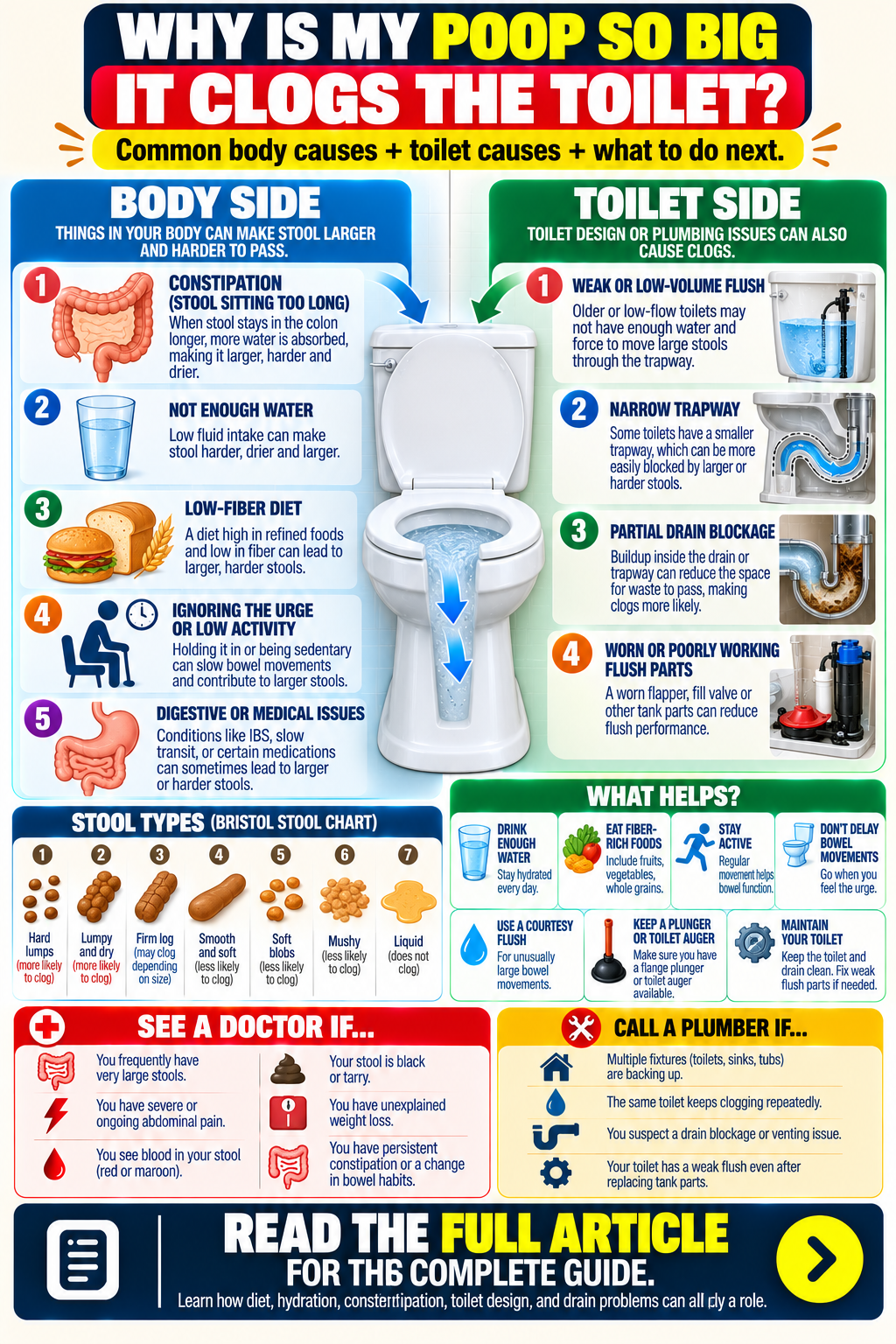
If your bowel movements are consistently hard or painful, addressing constipation may help more than changing your toilet.
Dietary and Lifestyle Causes of Large Poop
What you eat and how you live can affect stool size, consistency, and bowel movement frequency.
Let’s look at the habits most likely to contribute to the problem.
1. Eating Too Little Fiber
Fiber helps support regular bowel movements and affects how much water stool retains.
A diet dominated by refined grains, highly processed snacks, and low-fiber foods may contribute to constipation.
Common examples include white bread, some packaged snacks, and meals with few vegetables or whole grains.
However, fiber also adds bulk to stool. The goal isn’t necessarily to make your poop smaller. It’s to keep it soft and easy to pass.
2. Not Drinking Enough Water
When your body doesn’t get enough fluid, stool may become drier and harder to pass.
This is particularly important when you’re increasing fiber intake.
Drinking enough water helps fiber work effectively, although drinking excessive amounts won’t automatically cure constipation.
3. Ignoring the Urge to Poop
Holding in a bowel movement allows stool to remain in the colon longer.
As more water is absorbed, stool may become harder. Repeatedly delaying bowel movements can contribute to constipation.
If you frequently ignore the urge to go, changing that habit may make a noticeable difference.
4. Lack of Physical Activity
Regular movement helps support normal bowel function.
People who spend long periods sitting or have limited physical activity may experience constipation more often.
Walking and other suitable activities can help encourage more regular bowel movements.
5. Medicines and Supplements
Some medications and supplements can cause constipation.
Examples include certain iron supplements, calcium supplements, opioid pain medications, and some antacids or other prescription medicines.
If constipation started after beginning a medication, discuss it with your healthcare professional. Don’t stop prescribed treatment on your own.
Foods That May Help With Constipation
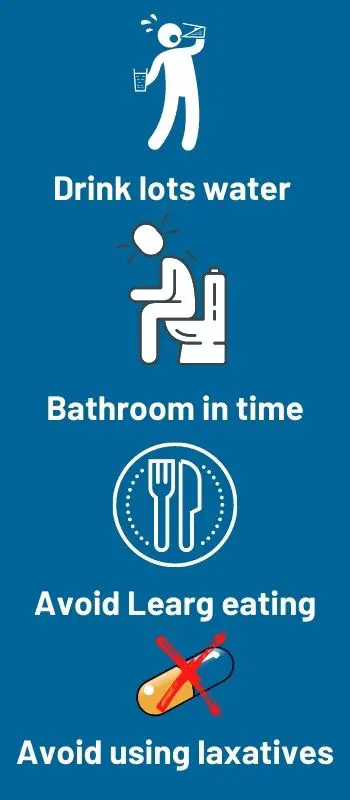
Instead of eliminating entire food groups, focus on eating a balanced diet that contains enough fiber.
Helpful options include:
- Prunes and pears: Provide fiber and other compounds that may support bowel movements.
- Whole grains: Oatmeal, brown rice, and whole-grain bread add dietary fiber.
- Beans and lentils: Offer substantial amounts of fiber.
- Vegetables: Broccoli, carrots, peas, and leafy greens are useful choices.
- Fruits: Apples, berries, oranges, and plums can help increase fiber intake.
- Nuts and seeds: Provide additional fiber as part of a balanced diet.
Adults generally need about 22–34 grams of fiber daily, depending on age and sex.
Increase fiber gradually. Adding too much at once can cause bloating and gas, especially if you already have digestive problems.
Toilet and Plumbing Problems That Cause Large Poop to Clog
Sometimes, the answer to “Why is my poop so big it clogs the toilet?” has more to do with the toilet than your bowel movements.
A normal bowel movement may clog a toilet if the flush is weak or something is already obstructing the drain.
1. Weak Toilet Flush
When you flush, water moves through the bowl and carries waste into the trapway and drainpipe.
If the tank doesn’t release enough water, the toilet may struggle to remove larger waste.
A low tank water level, incorrectly adjusted flapper, or blocked bowl outlets can contribute to weak flushing.
Modern low-flow toilets can flush effectively, so water-saving technology itself isn’t necessarily the problem.
2. Narrow or Restricted Trapway
The trapway is the curved passage inside the toilet that carries waste toward the drain.
Its design varies between toilet models.
Some toilets have less room for bulky waste, while others use larger or specially designed trapways to improve waste removal.
Even a well-designed toilet can clog if an object is stuck inside this passage.
3. Partial Drain Blockage
A toilet may still flush despite having a partial obstruction.
Objects, wipes, or accumulated debris can reduce the available space inside the trapway or drain.
When a large bowel movement passes through, it may catch on the obstruction and create a complete clog.
If this keeps happening even with normal amounts of toilet paper, our guide on why a toilet keeps clogging explains the common plumbing causes and what to check.
4. Too Much Toilet Paper
Sometimes, the poop isn’t the only problem.
Using a large amount of toilet paper during one flush can make an otherwise manageable bowel movement difficult to clear.
If the toilet frequently clogs, try flushing in smaller batches instead of allowing waste and paper to accumulate.
How to Clear a Toilet Clogged by Large Poop
If the toilet is already clogged, don’t keep flushing. That may cause the bowl to overflow.
- Wait briefly to see whether the water level drops.
- Use a flange-style toilet plunger to create a proper seal around the drain opening.
- Apply steady plunging strokes without splashing wastewater.
- If plunging fails, use a toilet auger designed to protect the porcelain.
- If the clog keeps returning, have the drain inspected by a plumber.
If you’re not familiar with an auger, follow our step-by-step toilet auger guide before inserting the tool into the trapway.
If you don’t have a plunger available, you can also review ways to unclog a toilet without a plunger. Not every household method works on a large, solid clog, so avoid forcing objects into the drain.
Avoid harsh chemical drain cleaners. They may create safety hazards and are usually unnecessary for clearing ordinary toilet waste.
Also, avoid replacing the toilet until you’ve checked its flush performance and drain condition.
Health Conditions That Can Cause Large or Hard Stools
Occasional large bowel movements are common. But repeated hard, painful, or unusually large stools may be associated with an underlying health problem.
Constipation
Constipation is one of the most common explanations for hard, difficult-to-pass stool.
Signs include:
- Fewer than three bowel movements per week.
- Hard, dry, or lumpy stool.
- Straining or pain during bowel movements.
- Feeling that your bowel hasn’t emptied completely.
Stool that stays in the colon for a long time can become increasingly dry and difficult to pass.
Irritable Bowel Syndrome (IBS)
Some people with IBS experience constipation, abdominal discomfort, and changes in bowel habits.
During periods of constipation, stool may become harder or more difficult to pass.
However, large stool alone doesn’t mean you have IBS.
Constipation in Children
Children who regularly hold in bowel movements can develop significant stool buildup.
This may lead to unusually large bowel movements, painful stools, or stool leakage into underwear.
Repeated toilet-clogging stools in a child, especially with pain or stool accidents, should be discussed with a pediatrician.
Other Medical Conditions
Hypothyroidism, certain neurological disorders, and conditions affecting bowel movement can sometimes contribute to constipation.
Severe longstanding constipation may also lead to fecal impaction, in which hard stool becomes stuck and cannot pass normally.
These conditions require proper medical assessment rather than guesswork based on stool size.
When to Seek Medical Help
Talk to a healthcare professional if large or hard stools keep returning despite changes to your diet and routine.
Seek prompt medical care if you experience:
- Blood in your stool or rectal bleeding.
- Unexplained weight loss.
- Persistent abdominal pain.
- Significant changes in your usual bowel habits.
- Repeated painful bowel movements.
Seek urgent medical attention if constipation occurs with severe or constant abdominal pain, vomiting, marked abdominal swelling, or inability to pass gas. Black, tarry stool also needs urgent evaluation.
How to Prevent Oversized Poop and Toilet Clogs

Preventing repeated clogs often involves taking care of both your bowel habits and your toilet.
1. Stay Hydrated
Drink enough fluids throughout the day, particularly when eating more fiber.
Fluid needs vary with age, activity, climate, and medical conditions, so a fixed number of glasses isn’t appropriate for everyone.
2. Eat a Balanced, Fiber-Rich Diet
Include fruits, vegetables, beans, and whole grains in your regular meals.
Increase fiber slowly and make sure you’re drinking enough fluids.
Fiber helps regulate stool consistency, although it won’t necessarily make every bowel movement smaller.
3. Exercise Regularly
Walking and other suitable physical activities can help support regular bowel movements.
Even short, consistent periods of movement are useful if you’ve been inactive.
4. Don’t Ignore Bathroom Urges
Go when you feel the need rather than repeatedly delaying bowel movements.
Giving yourself enough time and avoiding excessive straining can also make the process more comfortable.
5. Consider Constipation Treatment When Needed
If food, fluids, and activity aren’t enough, a healthcare professional or pharmacist can advise whether a fiber supplement or suitable laxative may help.
Some laxatives are appropriate for short-term or longer-term use under guidance. Frequent self-treatment without understanding the cause isn’t recommended.
6. Maintain Your Toilet
Check that the tank fills to the recommended level and the flush mechanism works properly.
Clear partial blockages, avoid flushing wipes, and use a toilet auger when necessary.
If the toilet repeatedly clogs despite normal waste and proper maintenance, professional plumbing inspection may be worthwhile.
When the toilet itself has been identified as the problem and repair hasn’t helped, you can compare toilets designed for better waste removal. Look at tested flushing performance, trapway design, and water efficiency rather than assuming any toilet is completely clog-proof.
Frequently Asked Questions
Why is my poop so big it clogs the toilet?
It may result from constipation, infrequent bowel movements, or naturally large stool. A weak flush, narrow trapway, or partial drain blockage can also make the toilet clog more easily.
Is it normal to have poop that’s too big to flush?
Occasionally, yes. Stool size varies. However, consistently hard, painful, or difficult-to-pass bowel movements deserve attention, especially when accompanied by other digestive symptoms.
Can certain foods make poop unusually large?
Diet affects stool volume and consistency. Low-fiber eating patterns may contribute to constipation, while fiber-rich foods can increase stool bulk but also help improve regularity and softness.
Should I buy a new toilet if large poop keeps clogging it?
Not immediately. First check for weak flushing, excessive toilet paper, or a partial blockage. Consider a replacement only if the existing toilet performs poorly despite proper maintenance.
Can constipation make poop too large to pass?
Yes. When stool remains in the colon for an extended period, it can become hard and difficult to pass. Severe stool buildup may require medical treatment.
When should I see a doctor about large bowel movements?
Seek medical advice if the problem is persistent, painful, or accompanied by bleeding, unexplained weight loss, or changes in bowel habits. Severe abdominal pain with vomiting or inability to pass gas needs urgent assessment.
Conclusion
So, why is my poop so big it clogs the toilet? Sometimes it’s related to constipation or bowel habits. Other times, the toilet simply isn’t flushing properly.
Start by looking at whether your stool is hard or difficult to pass. Drinking enough fluids, eating a balanced amount of fiber, staying active, and not delaying bowel movements may help.
At the same time, check your toilet for weak flushing or partial blockages before deciding it needs replacement.
If large bowel movements keep happening with pain, bleeding, or other unusual symptoms, speak with a healthcare professional.
Taking care of your digestive health and keeping your toilet in good working condition can help prevent the same frustrating clog from happening again.

Hi, this is Robert Crossan, the owner of this website, has 17 years of experience in the installation, maintenance, and repair of toilets and plumbing systems. After completing the Level 2 Basic Plumbing course in 2005, I started working in both domestic and commercial buildings as a professional plumber. So I can figure out the core difference between different toilet models and brands. It also helped me monitor their work performance and setbacks.